
The women’s rights movement has come a long way on college campuses.
There was a time when girls and boys didn’t attend the same school, as formal
education was seen as more important for boys. Girls were expected to learn
domestic duties from their mothers and tend to the household, so many young
women learned to read and write at home rather than attend a “dame school”. Even in higher education, women had very few
choices when it came to majors or vocations. They had to attend female
seminaries that only provided the option to learn “ladylike” skills rather than
the formal, academic training provided to males. Most women would go on to
become teachers, as that was one of the few acceptable occupations, and only
unmarried women could become teachers.
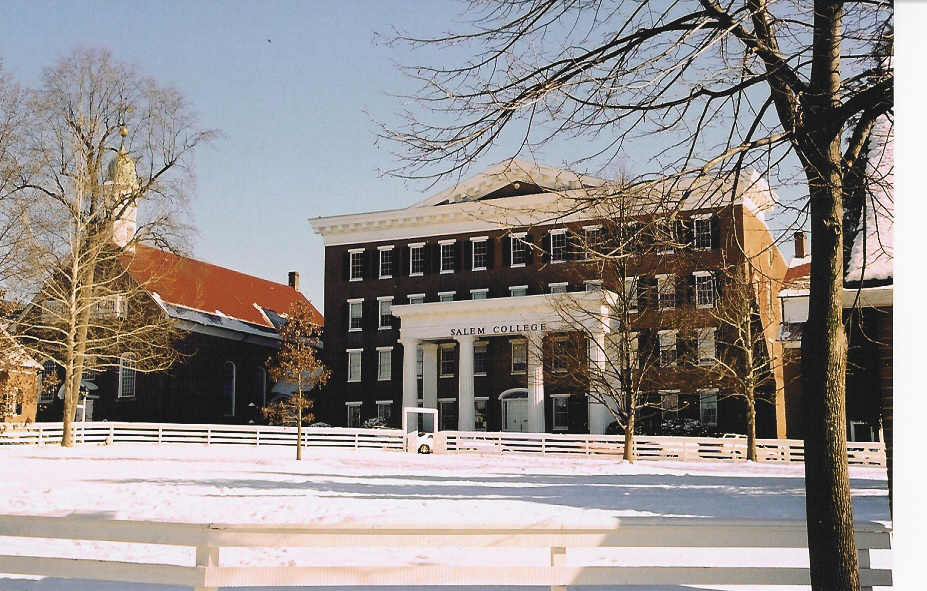
Salem College- "oldest female educational establishment that's still a women's college"
Photo by Marilyn Hayes
Fast forward to today- women account for the majority of undergraduate
students in higher education. At co-ed institutions, women are able to attend
the same classes and pursue the same majors as males. There are increasingly
more women joining the teaching force of higher education, proving how hard
they worked to get their Master’s and Doctorate degrees in such a
male-dominated industry. Women hold higher administrative positions, including
the highest position of President (or the equivalent at other institutions). Female students are able to join pretty much
any student organization they desire, except for the obvious traditional male
fraternities and other social groups catered to men (mostly due to the fact
that they have the word “men” in the title). While males have some of their own
groups, females have their own as well- on my campus, we have various
sororities and a unity group for women of color.
I had an English professor a few years ago who wouldn’t allow anyone to
address her by any title less than Doctor. “I worked very hard to get my PhD,
so it is disrespectful for you to reduce my achievement by calling me ‘Mrs.’ or
anything like that,” she said during our first class period. A male student
went on to call her Admiral sometimes, and she accepted that since that was an
upgrade in her eyes.
Even with all of the seemingly equal opportunities for women on college
campuses, there are still an overwhelming amount of male professors at your
traditional university. As someone who will be graduating in less than two
months, I can confidently say that about 80% of my professors have been male. I’ve
had on average one female professor per semester, and I take 4-5 classes per
semester. There are still men (professors, department heads, and students
alike) who make misogynistic and sexist comments in class and boldly at the
face of women. The tenured men can’t be fired unless grievances are filed,
regardless if many people heard the comments publicly or not. So many people
let these comments pass by saying, “Well, they’re old and senile anyway” or “They’ll
retire soon enough” or “Just get through the class and you’ll never have to
take another class with them ever again” and the like. So many people have the
attitude that just because these men come from a different generation and era
that it is okay for them to make
these comments because you can’t change the ways of older adults.
As I stated earlier, women’s rights on campuses have come a long way,
but we still have a ways to go until we reach a truly equal status on the
majority of campuses across the nation.

Photo from USA Today

No comments:
Post a Comment